

Contents
What is Ketamine?
Ketamine is a chemical used as a medication, for anesthesia, and as a recreational event. It is a dissociative anesthetic meaning it can change an individual’s perception of sight and sound, usher in a feeling of detachment from the environment (dissociation) while simultaneously relieving pain (anesthetic).
Other Names for Ketamine
K, Special K, K2, Vitamin K, Super K, Donkey Dust, Super C, Lady K, Kat, Kit Kat, Wonk, Ketaset, Ketaject, Jet, Super Acid, Green, Purple, Mauve, Super Acid, Special LA Coke, Cat Tranquilizers, Cat Valium
Ketamine Brand Names
Ketalar or Spravato.
Ketaset, Vetalar, Vetaket are the brand names of surgical anesthesia used by veterinarians.
Effects of Ketamine
In smaller doses, such as those used recreationally, effects can lead to:
- Feelings of relaxation and calmness
- Freedom from pain
- Dizziness
- Reduced mental state
- A sense of detachment from one’s body
- Slurred speech or inability to communicate
- Diminished reflexes
- Hallucinations lasting from 30-60 minutes
- Repetitive, uncontrolled movement of eyes (nystagmus)
Coma and profound unconsciousness result from larger doses.
What Are the Side Effects of Ketamine?
Short-term
Short-term problems may include learning, attention span, memory, lapses into dreamlike states, sedation, confusion, raised blood pressure, genitourinary pain, unconsciousness, adverse psychiatric events, and slowed breathing.
Long-term
Long-term problems may include ulcers and pain in the bladder, kidney problems, stomach pain, depression, liver injury, and poor memory.
Ketamine Bladder Syndrome
The recreational use of ketamine leads to “ketamine bladder syndrome,” a serious and irreversible damage to the urinary tract treated only by analgesics and cessation of the drug. Radical reconstructive surgery may be needed in end-stage disease. Persistent and unexplained lower urinary tract symptoms, especially in males, are usually the first presenting problems. It is estimated that 20% of ketamine users experience urinary tract symptoms.
How Do People Take Ketamine?
Ketamine can be taken orally, snorted, inhaled, or smoked as a means of ingestion, making it an easy drug to use in social events. Although not a common practice, some people make it into a pill form and take it orally, although this form has been known to cause nausea and vomiting. Others “bomb it,” meaning they swallow the powder wrapped in cigarette paper.
What Are the Therapeutic Uses of Ketamine?

Ketamine is a class III scheduled drug and is approved for use in hospitals, ketamine clinics, and other medical settings as an anesthetic and for the treatment of resistant depression. The primary medical uses of ketamine are:
As an Anesthetic
It first gained its popularity as an anesthetic on the battlegrounds of Vietnam in the 1960s. Ketalar can be used to augment other general or local anesthetics. Its ability to induce memory loss is valuable concerning its use in this capacity, as is its ability to relieve pain. It is used via IV or injected into a muscle when used for this purpose. It is not uncommon to receive ketamine as an anesthetic.
As an Antidepressant
On March 5, 2019, the Food and Drug Administration approved Spravato, a nasal inhalation form of ketamine, for the treatment of treatment-resistant depression. Recent studies show that oral administration of ketamine has significant antidepressive effects, although more randomized control trials are needed. IV infusion results in rapid relief of depression, with results continuing for 1-2 weeks post-infusion.
As a Treatment for Post-Traumatic Stress Disorder (PTSD)
More and more evidence is accumulating on the positive role ketamine may play in the treatment of PTSD. Ketamine acts by controlling glutamate metabolism via the N-methyl-D-aspartate (NMDA), brain-derived neutrophilic factors (BDNF), and mechanistic target of rapamycin (mTOR) pathways. Glutamate is the major excitatory neurotransmitter in the brain.
PTSD is the presence of traumatic and recurring memories, nightmares, or flashbacks of events that caused extreme distress to an individual. NMDA activation has been associated with these intrusive memories, and ketamine acts as an NMDA antagonist inhibiting the release of these flashback events. In animal models, PTSD conditions decreased BDNF levels in the brain while ketamine treatment reversed the effects of PTSD-like conditions and increased brain levels of BDNF.
Impaired fear extinction exacerbates PTSD. Ketamine, via the mTOR pathways, reverses this effect. Ketamine accelerates extinction learning in a model of fear conditioning.
For Drug Addiction
Preliminary studies show that ketamine may be effective in treating drug addiction. Ketamine has been shown to prolong abstinence from alcohol and heroin in detoxified individuals and reduce craving for and self-administered cocaine in non-treatment-seeking individuals. Possible mechanisms include enhanced neural regeneration, neuroplasticity, disruption of functional neural networks, treating depressive symptoms, blocking drug-related memories, and enhancing psychological therapy.
For Pain Control
Ketamine potentiates the effects of morphine when used as a pretreatment. Use of ketamine results in a lowered need for morphine. Low dose ketamine and morphine have similar effectiveness and safety ratings in an Emergency Department, suggesting ketamine is an alternative treatment for acute pain control.
E-counseling and psychedelics have also shown promising results in managing chronic pain, particularly in cases where traditional pharmacological interventions have failed. In addition, it is often used in pain situations that are unresponsive to morphine or in chronic noncancer pain. With ketamine, lower doses of the opioid morphine can be given to control pain, thus lowering the side effects of opioid medication.
Recreational Uses of Ketamine

It was in the early 1970s that ketamine started being used socially and recreationally. It was about that time that psychedelic experiments were being conducted on the drug in academia. The recreational effects most often achieved include:
Out-of-body Experiences
You may feel as if you are floating and unable to move your body. You are dissociated from your body and may not be able to move physically, yet you feel like you are floating or moving effortlessly through space and time. You may hallucinate during this experience and see and feel things that aren’t there. To some, this is an entirely mystical experience.
The K-Hole Experience
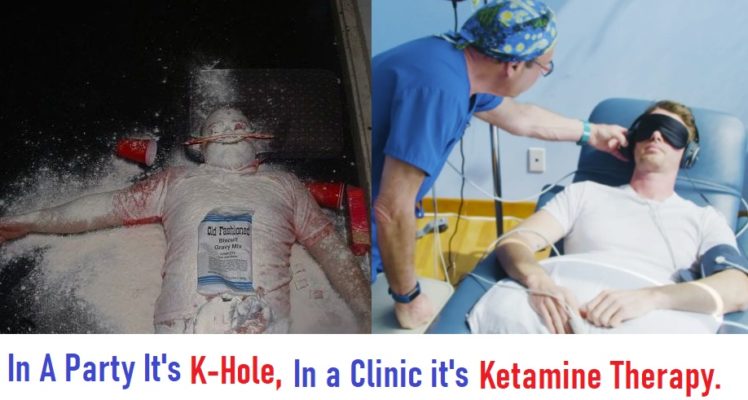
Falling into a “k-hole” refers to the state of intoxication that occurs when you take a high enough dose of ketamine that your awareness of the world around you merges into your consciousness, and you are not able to interact temporarily with the world around you.
Psychedelic Experiences
Although ketamine is technically a dissociative, not a psychedelic, still, colors and sounds may become vibrant and luminous and take on a life of their own. Colors may jump out at you or look like they are from another dimension entirely. Sounds are more intense with associated colors with the sounds.
Libido Enhancement
Some users will use ketamine before they have sex. Ketamine enhances perceptions and touch so that sex will feel more intense and emotional. A touch, a look, a stroke all take on electrifying and pulsating feelings provoking arousal beyond the mainstream. The literature describes it as having “unique” sexual effects, increased disinhibition, and lowered sexual standards.
Typical Ketamine Recreational Doses
The various routes of administration will act on the body in dose-related time periods and will have varying side effects depending on the route.
| Dosage | Route |
| 75-125 mg | IM or subcutaneous injection |
| 60-250 mg | Intranasal or snorting |
| 50-100 mg | Intravenously |
| 200-300 mg | Orally |
Ketamine Legal Status
Ketamine has been approved by the Food and Drug Administration (FDA) for use as an anesthetic since the 1960s. In 2019, FDA approved it for use for treatment-resistant depression. It continues to be regulated by the FDA and used for purposes other than what the FDA has authorized it for called “off-label” uses. It is classified as a schedule III drug, meaning it has medical benefits and must be administered by a medical professional.
In the UK, it is classified as a Class B drug. Penalties for possession are up to five years in prison and an unlimited fine. In Australia, it is a schedule 8 controlled drug. In Canada, ketamine is classified as a Schedule 1 narcotic, and in India, it has been added to Schedule X of the Drug and Cosmetics Act, requiring a special license for sale and maintenance of records of all sales for two years.
The Danger of Mixing Ketamine With Other Drugs
lCombining ketamine with other drugs, including over-the-counter medications, alcohol, and other illicit drugs, can be dangerous and downright unpredictable. You need to use care and caution when combining these chemicals since the outcome could be disastrous.
Use of ketamine with alcohol may cause clammy skin, decreased breathing, memory loss, increased urinary tract issues, and unconsciousness.
Conclusions
Ketamine is an up-and-coming drug with promises on the medical forefront in the areas of depression, PTSD, addiction, and pain control. It is also a drug with a huge potential for abuse, and although the pharmaceutical safety profile is vast, its potential side effects are real, troublesome, and poorly studied. Only you can make up your mind if it is a therapy worth trying.